Guerneville Forest Home
Guerneville Forest Home
 Overview
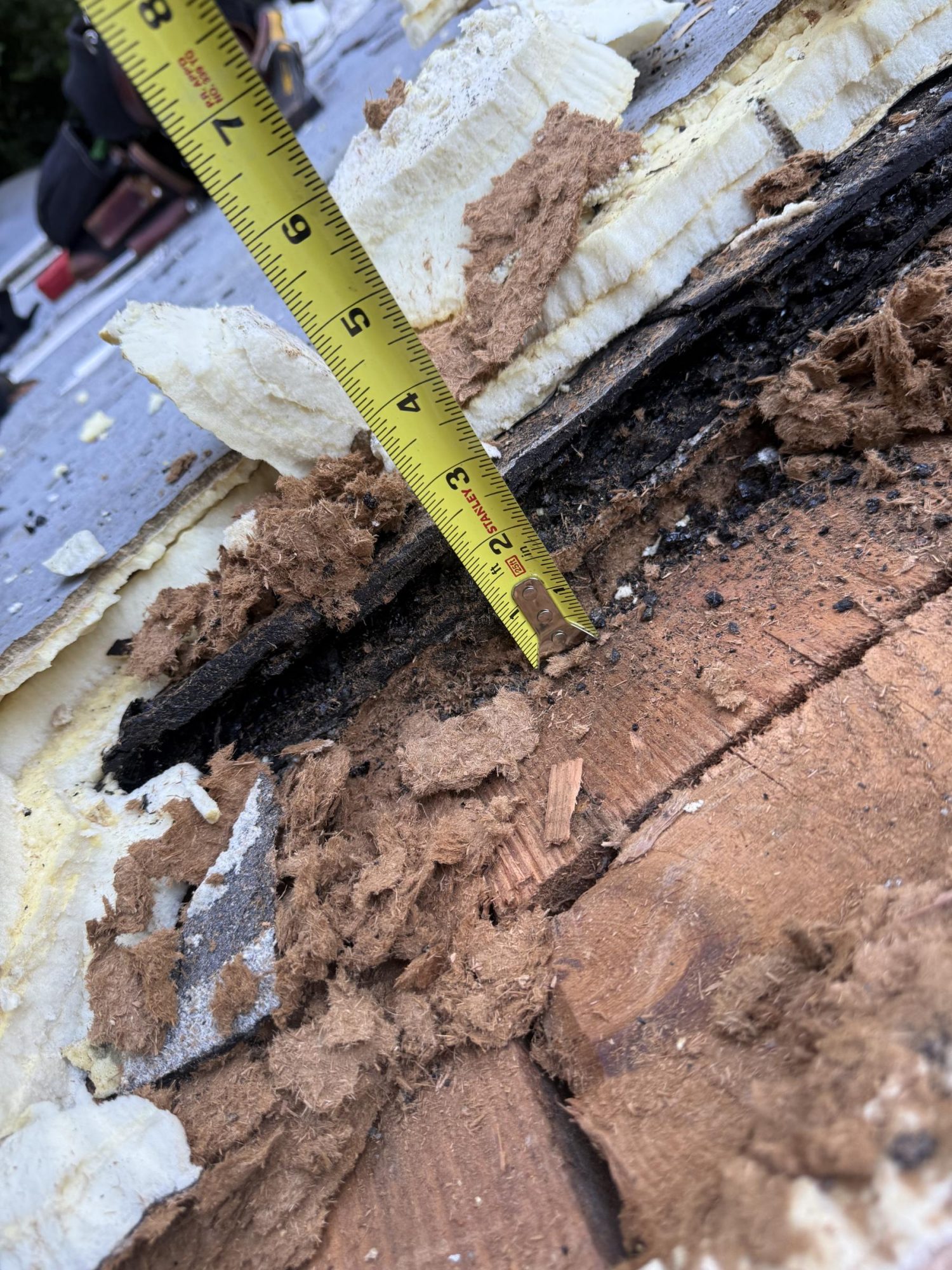
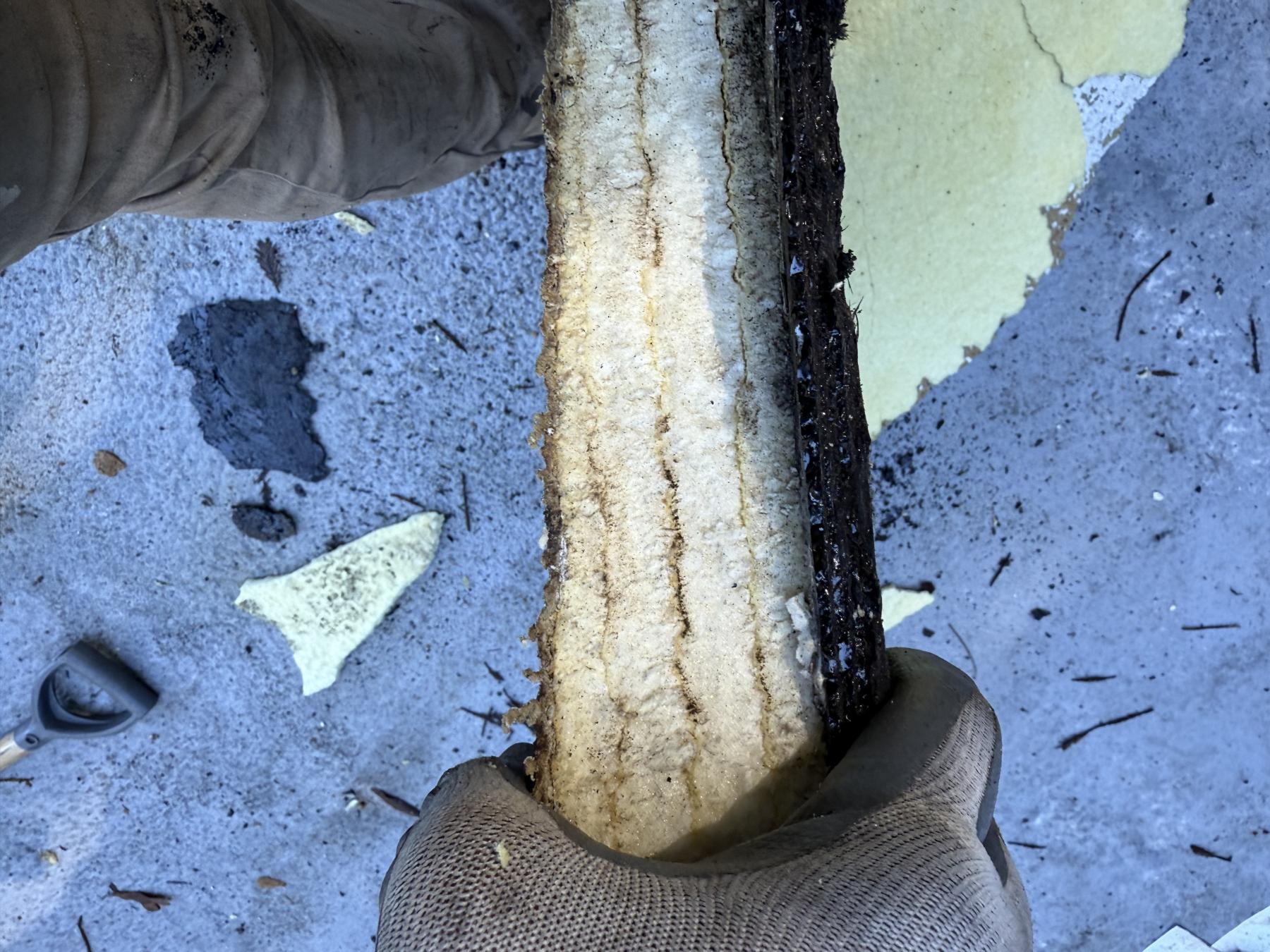
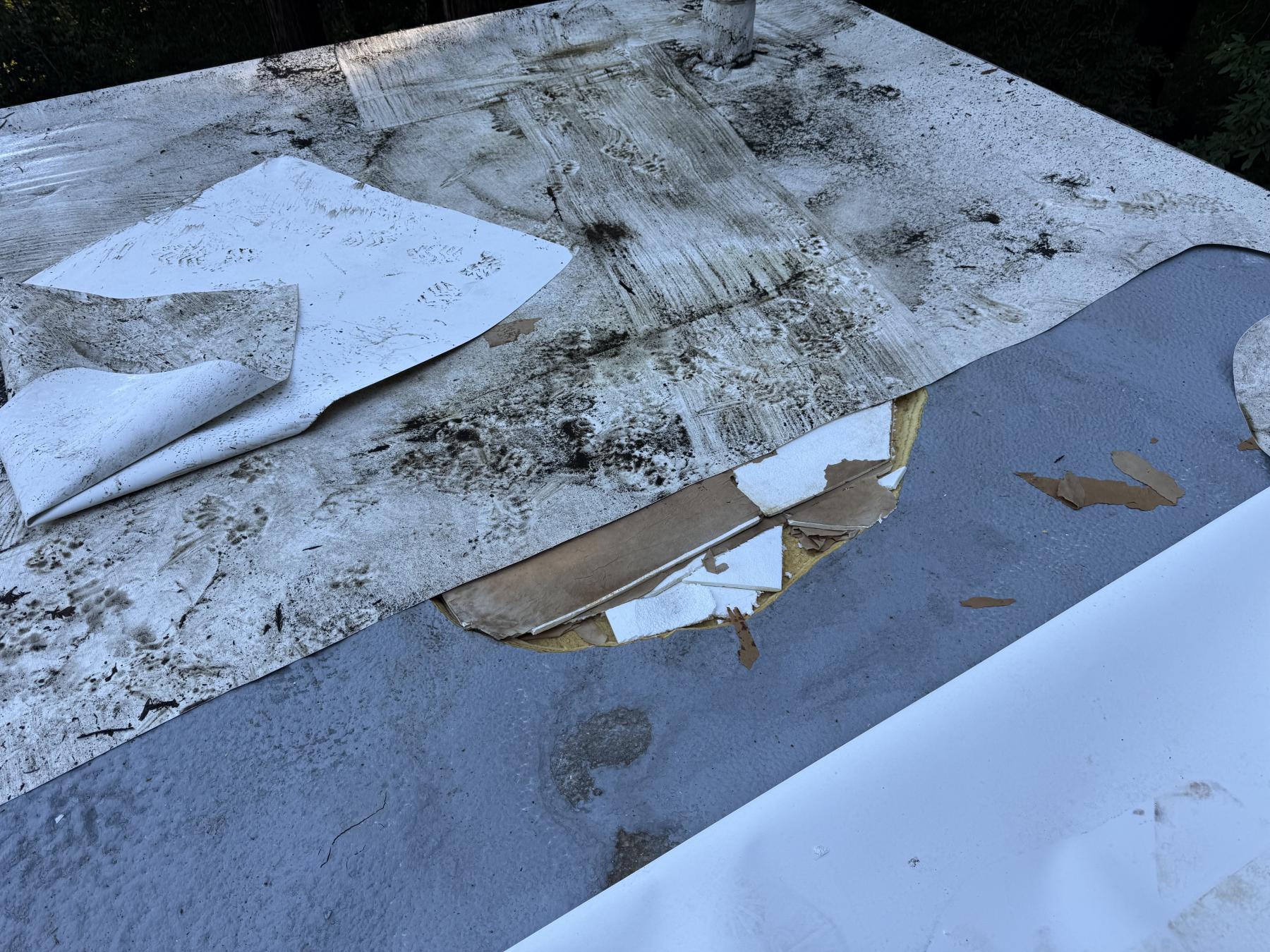
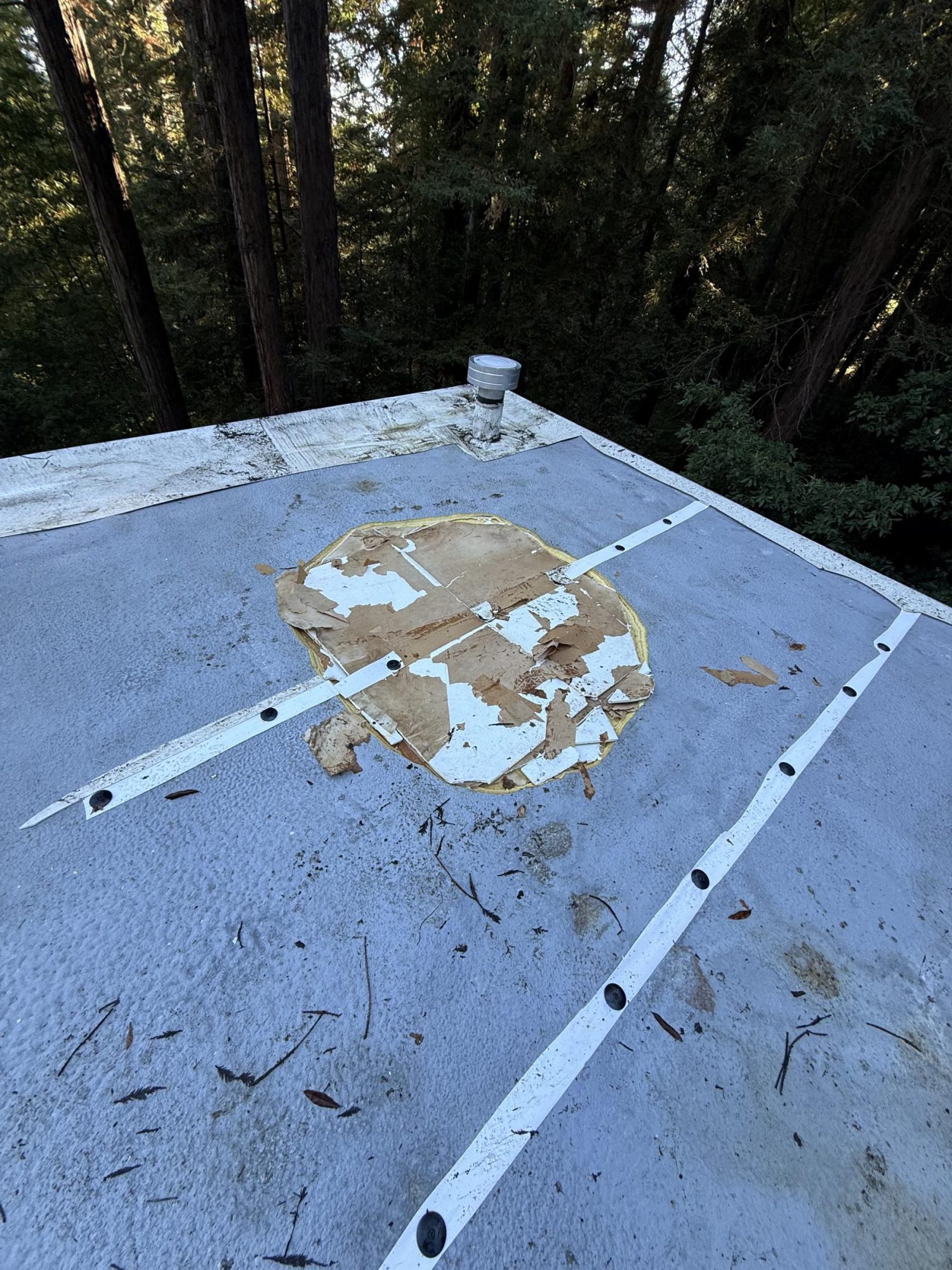
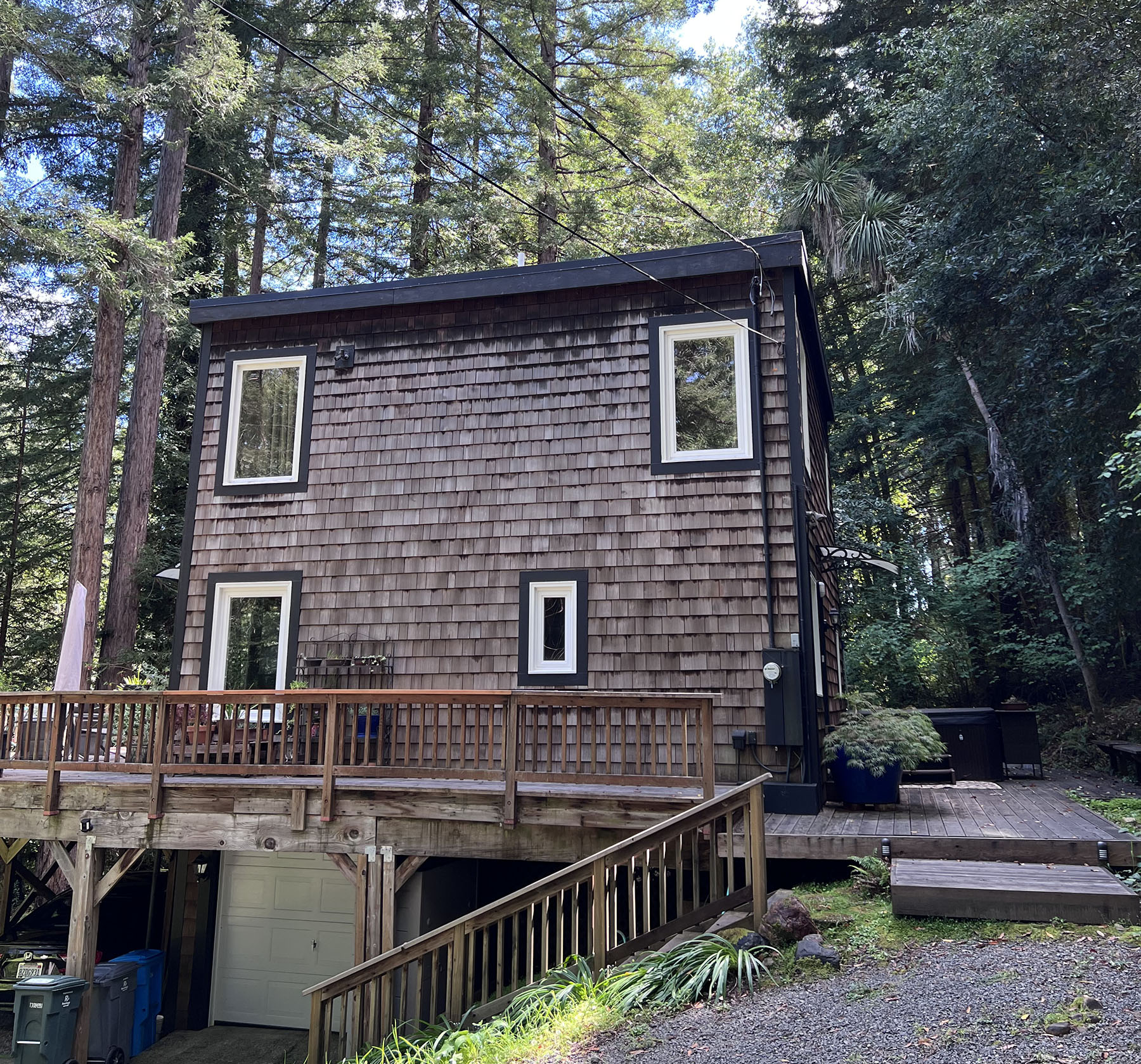
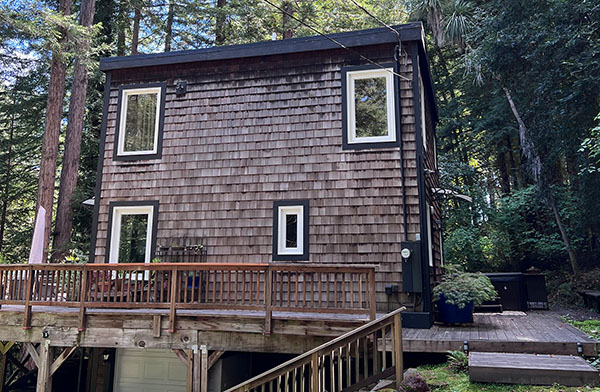
This flat roof was screaming for help by the time we got there. Previous roofers had taken the easy way out for years, stacking overlay on top of overlay until there was 5.5 inches of roofing piled on the home. The center of the structure had started to deflect under the weight, and the design problems underneath had never been addressed. The result was a roof that ponded water, leaked at every skylight, and dumped rainfall straight over the edges onto the fascias, deck, and foundation below.
The homeowner needed more than a new membrane — they needed the entire roof system rebuilt the right way, from the deck up.
What We Found
The roof made its failures impossible to miss:
- 5.5 inches of stacked overlays causing structural deflection in the center of the home and creating a permanent ponding water problem.
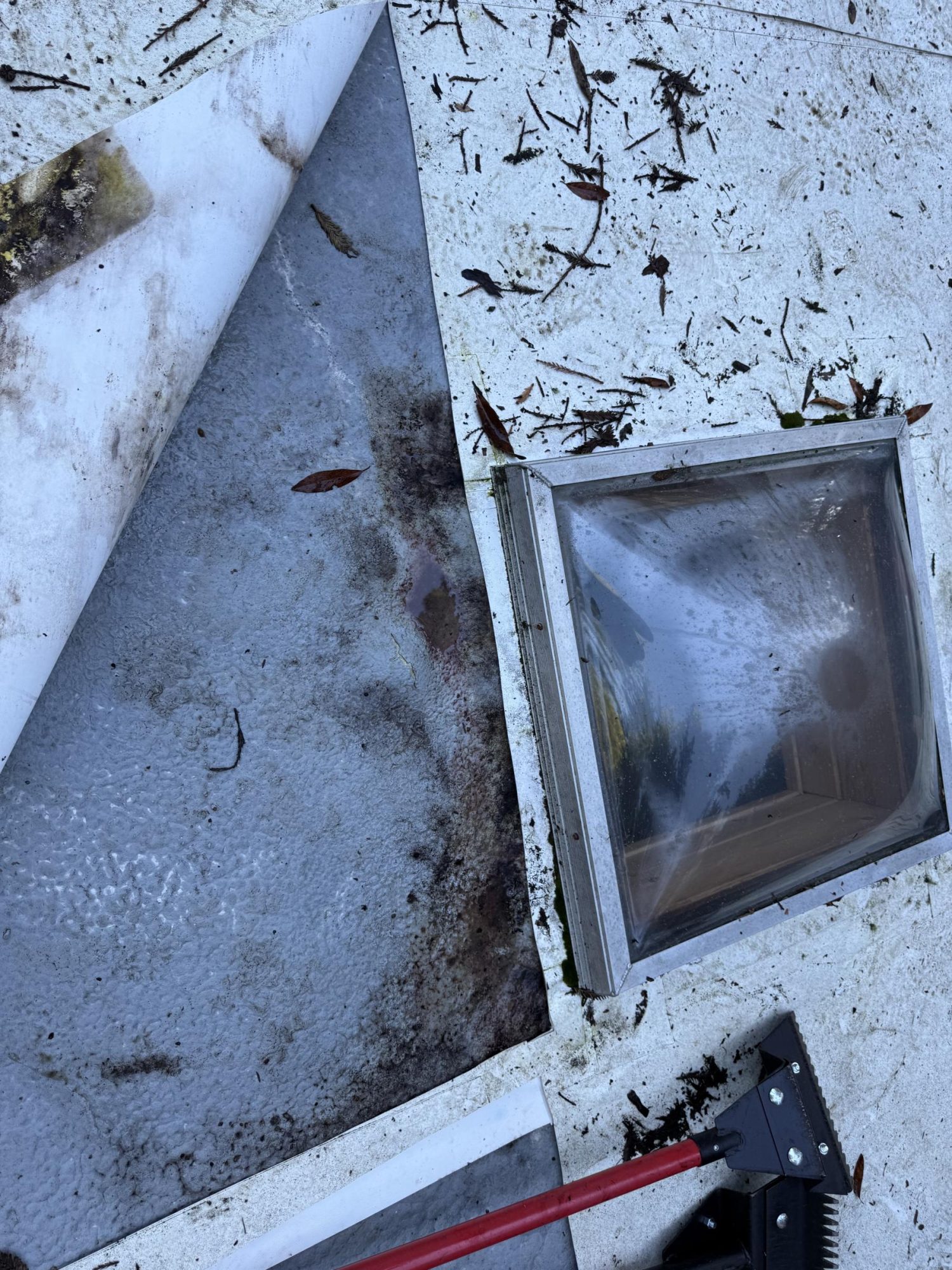
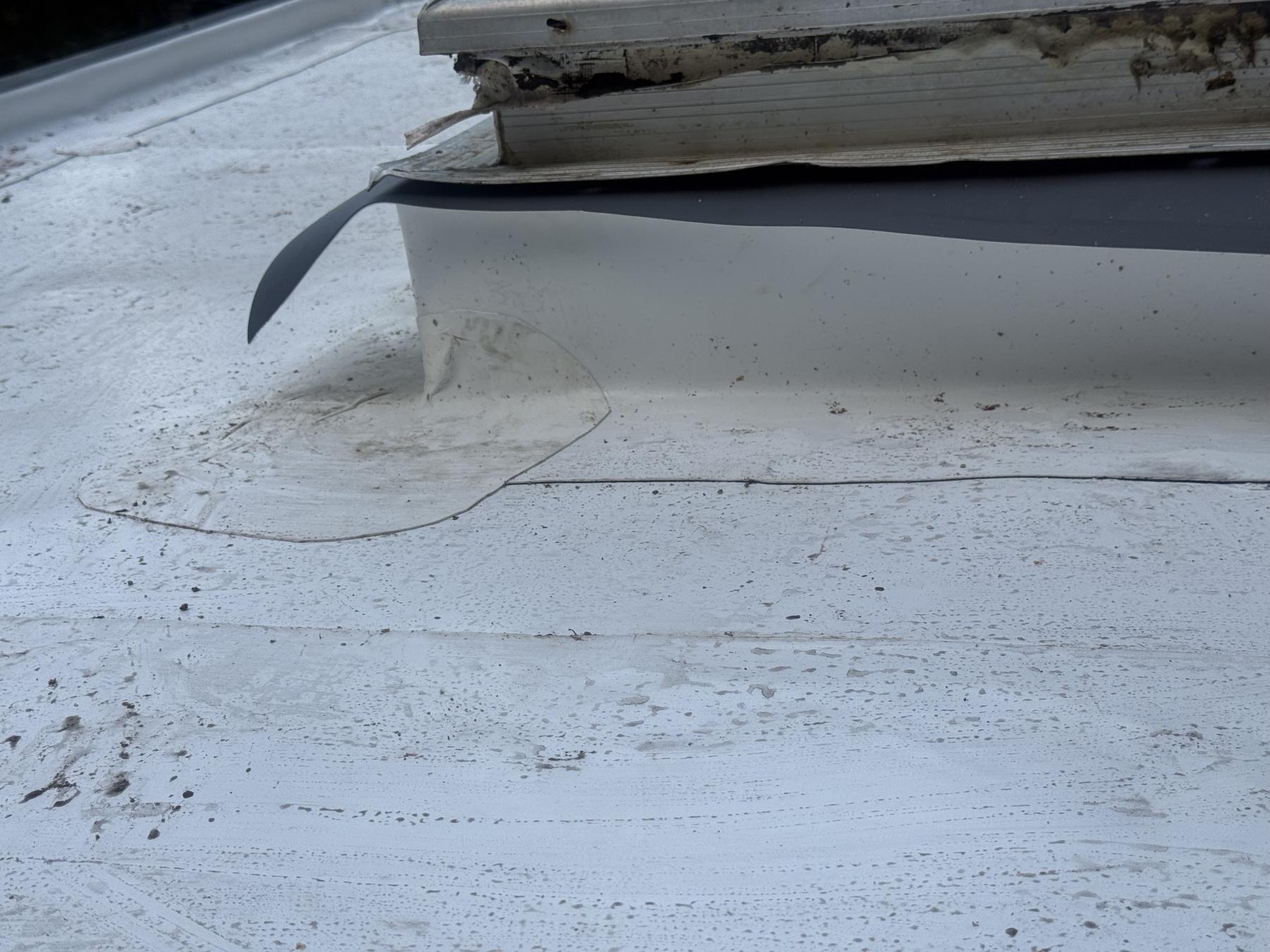
- Skylights installed flush with no curbs at all — meaning any water that reached them turned into an immediate leak.
- No parapet around the perimeter, so rainfall poured over the edges instead of draining where it should.
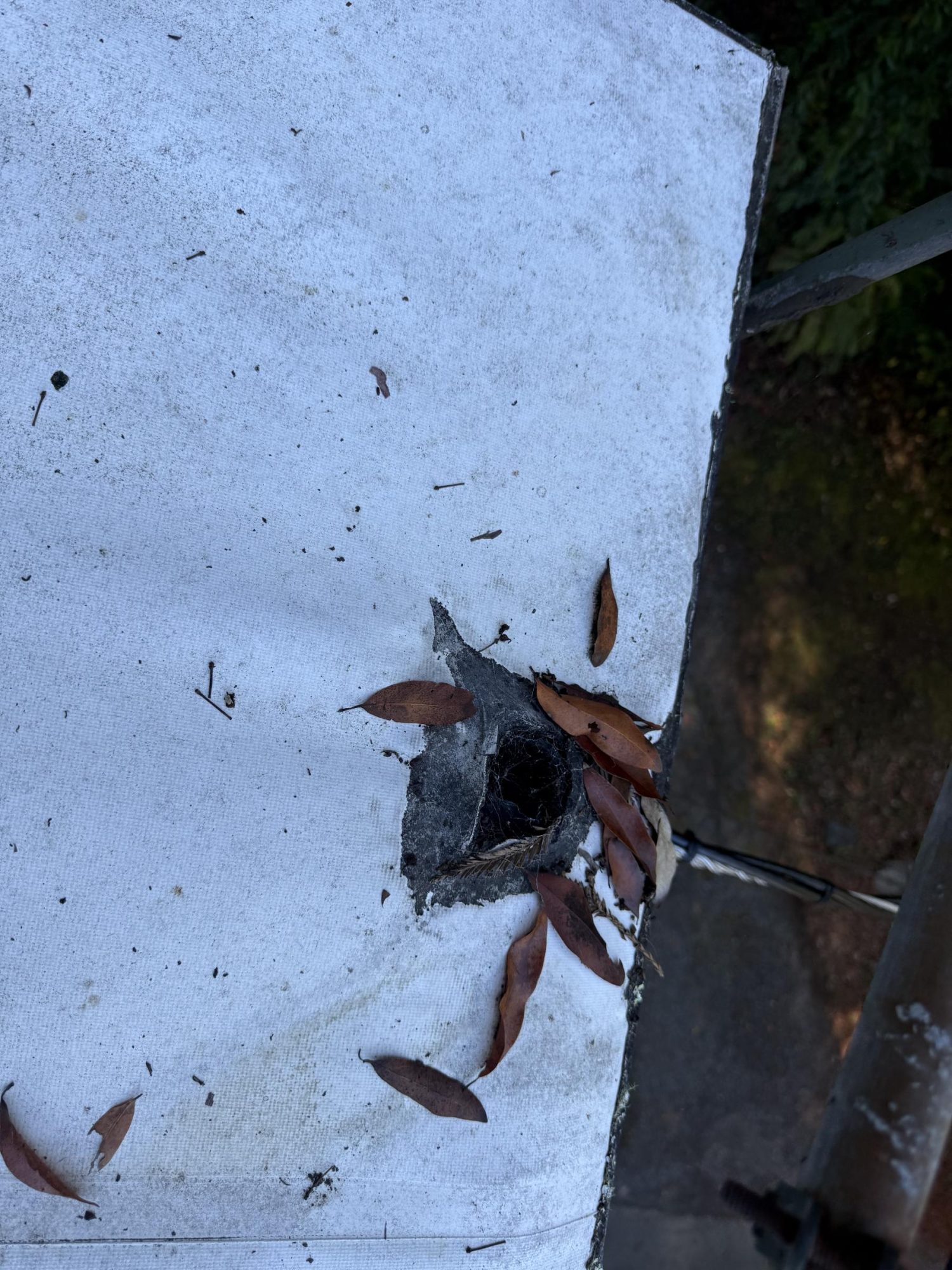
- Existing downspouts that were essentially useless because the roof was never designed to direct water toward them.
- Active water damage already showing on the fascia boards, the deck below, and creating long-term risk for the foundation underneath.
What We Did
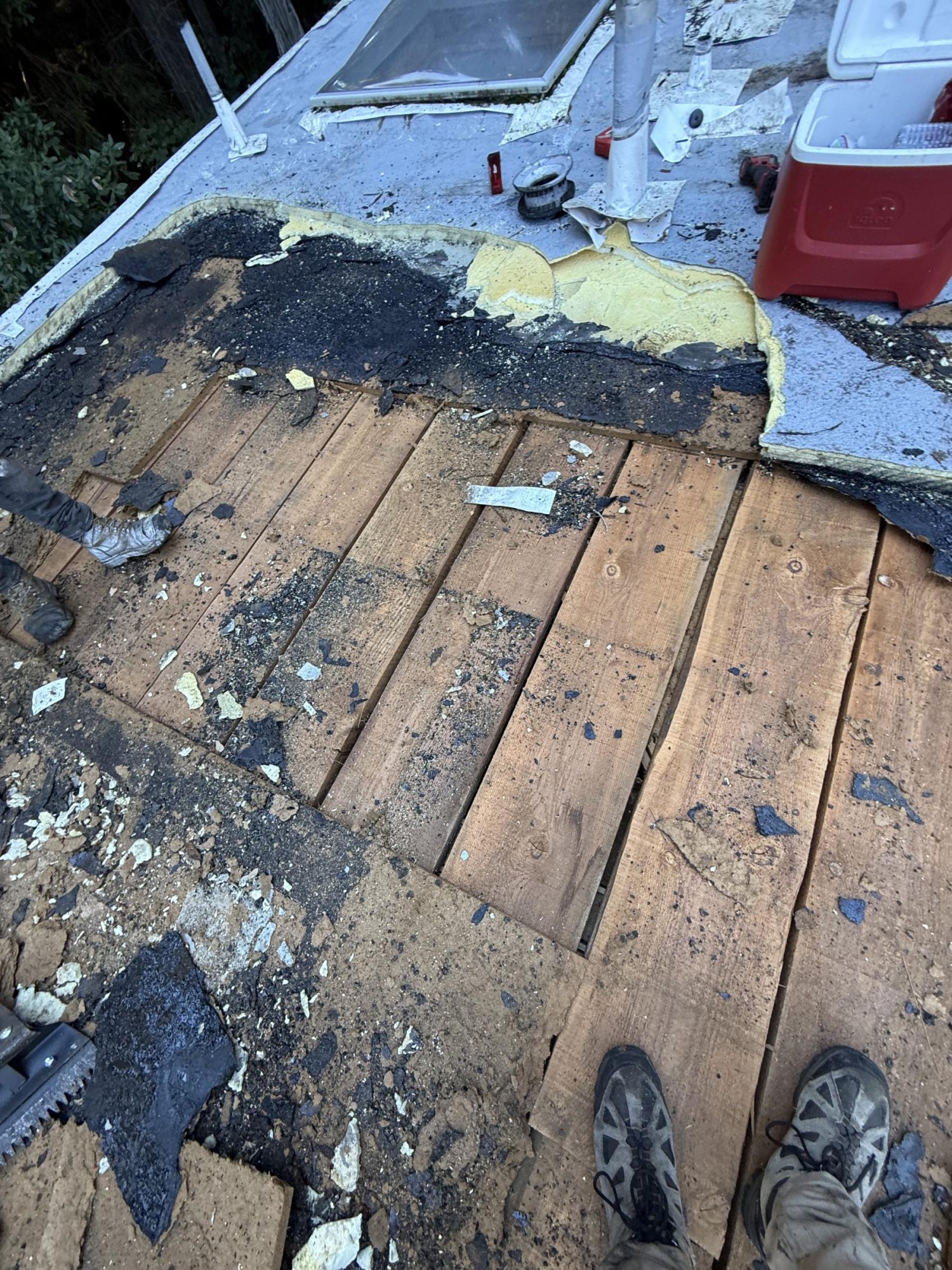
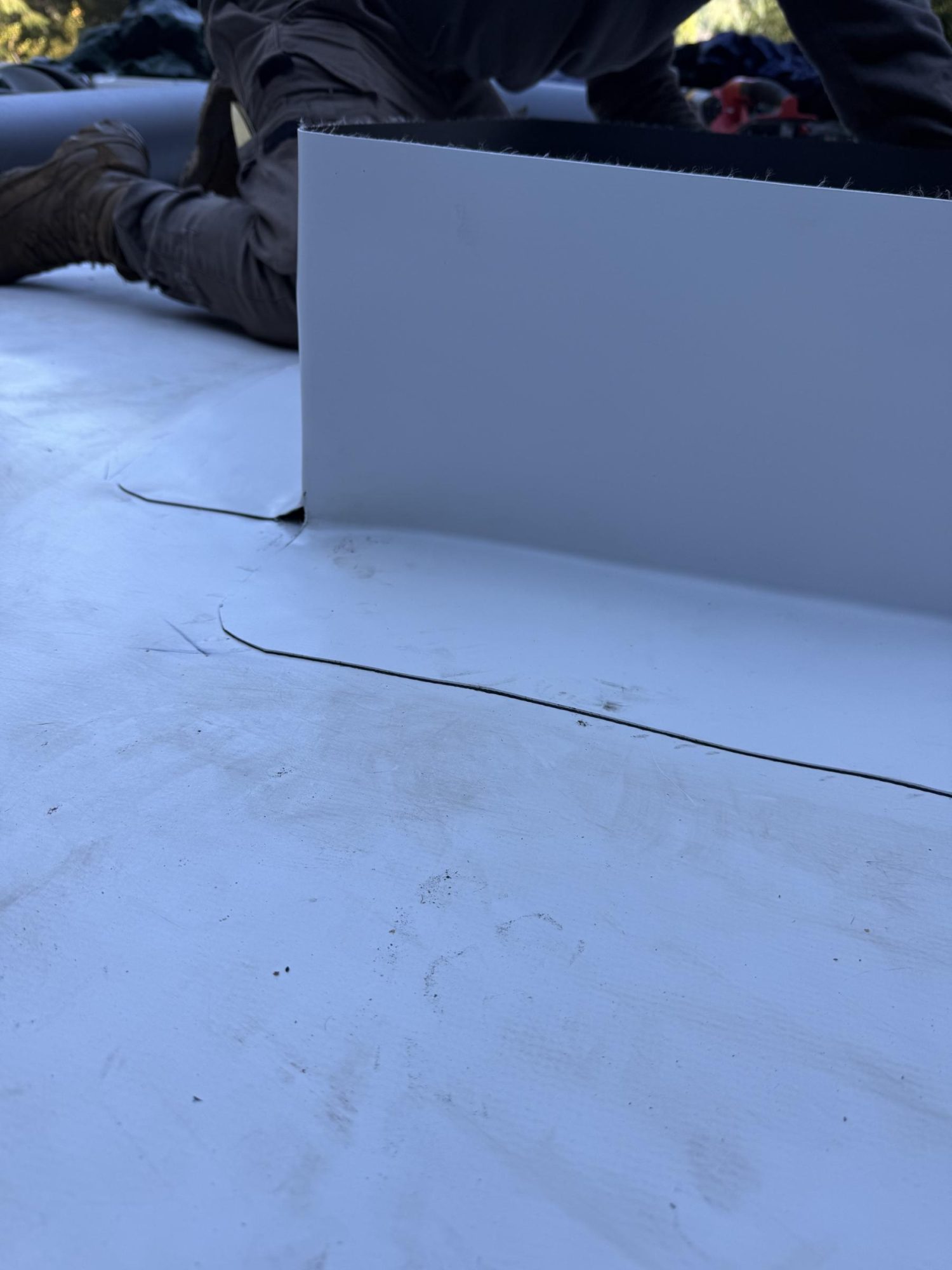
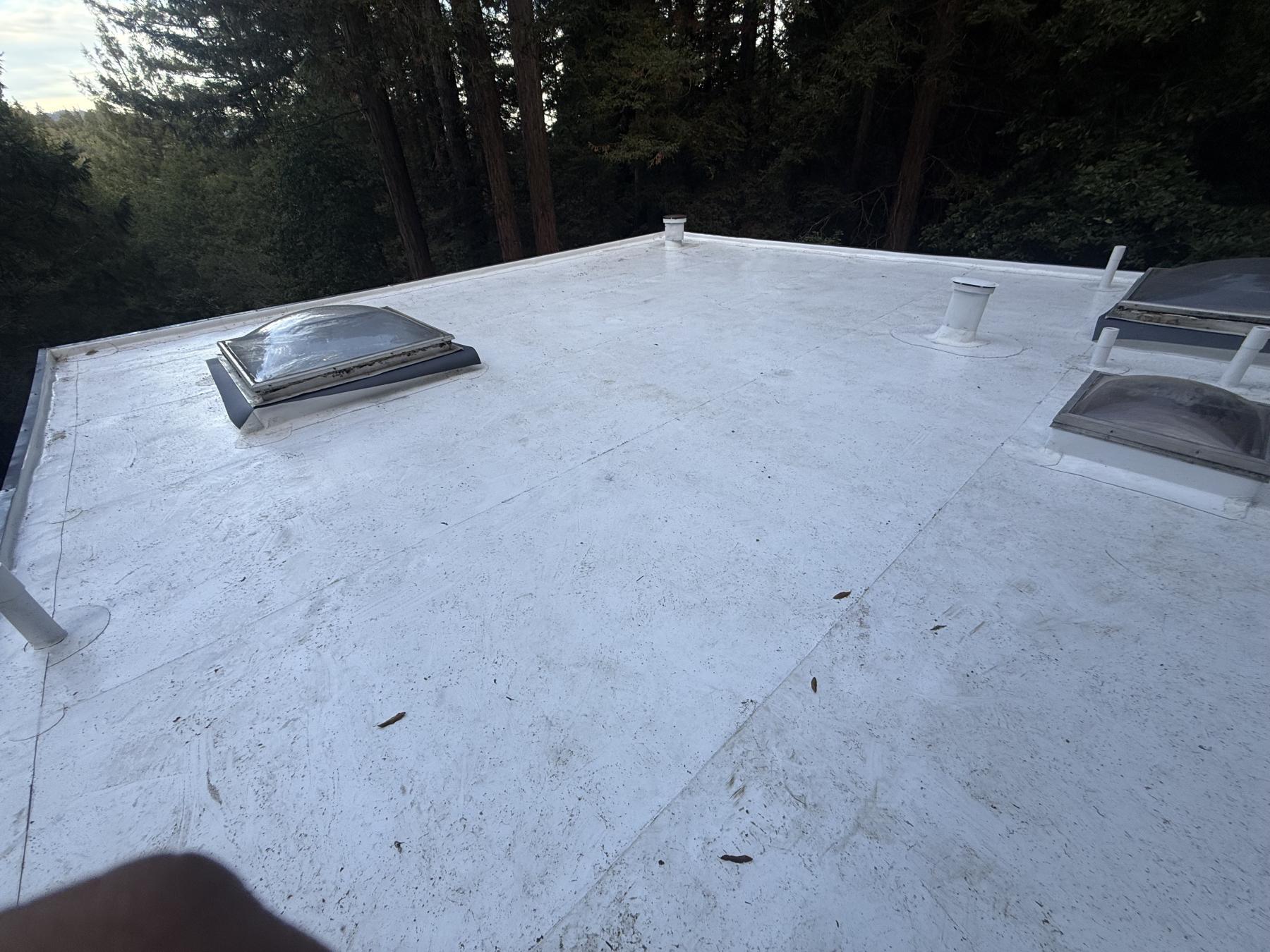
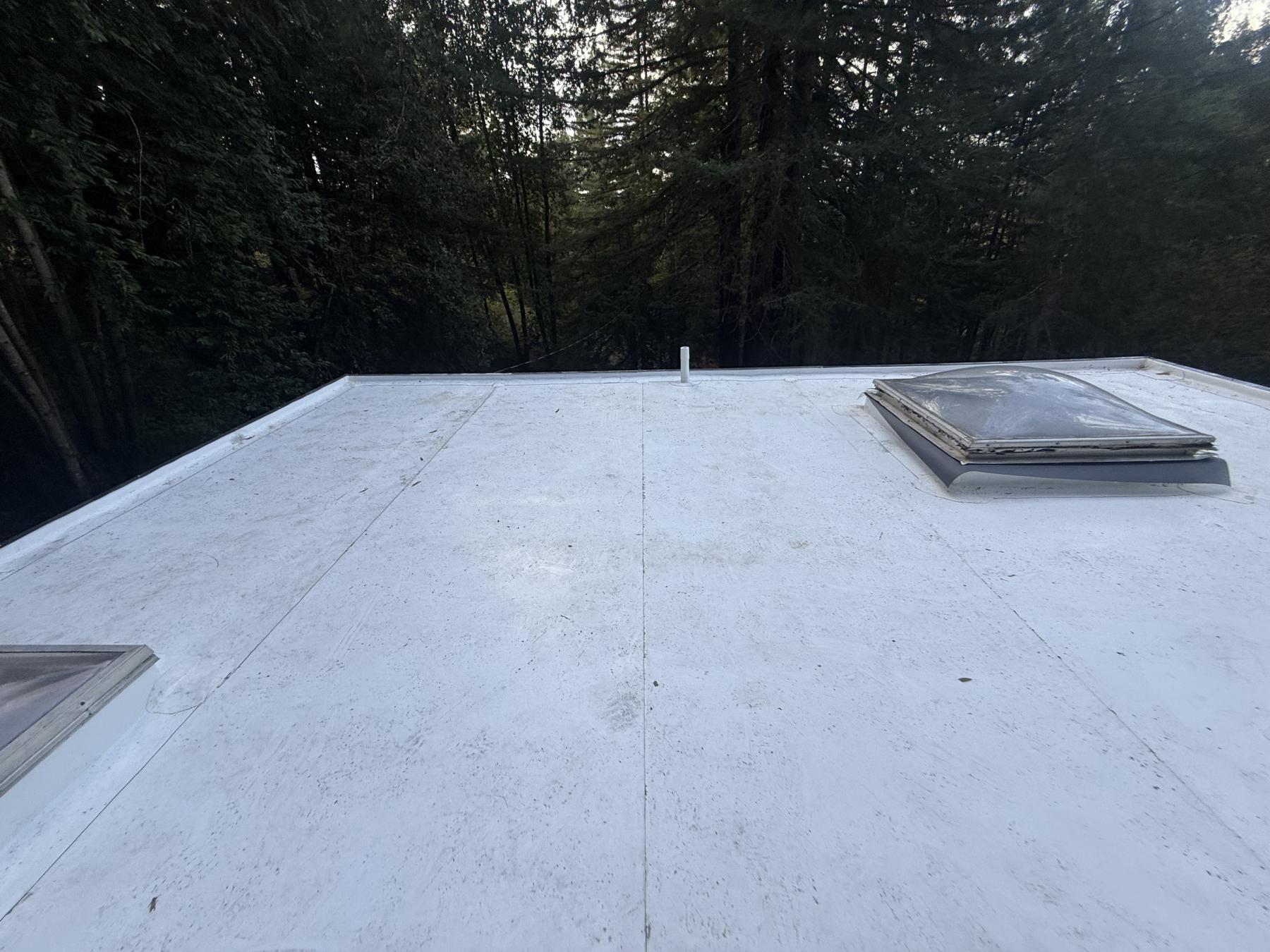
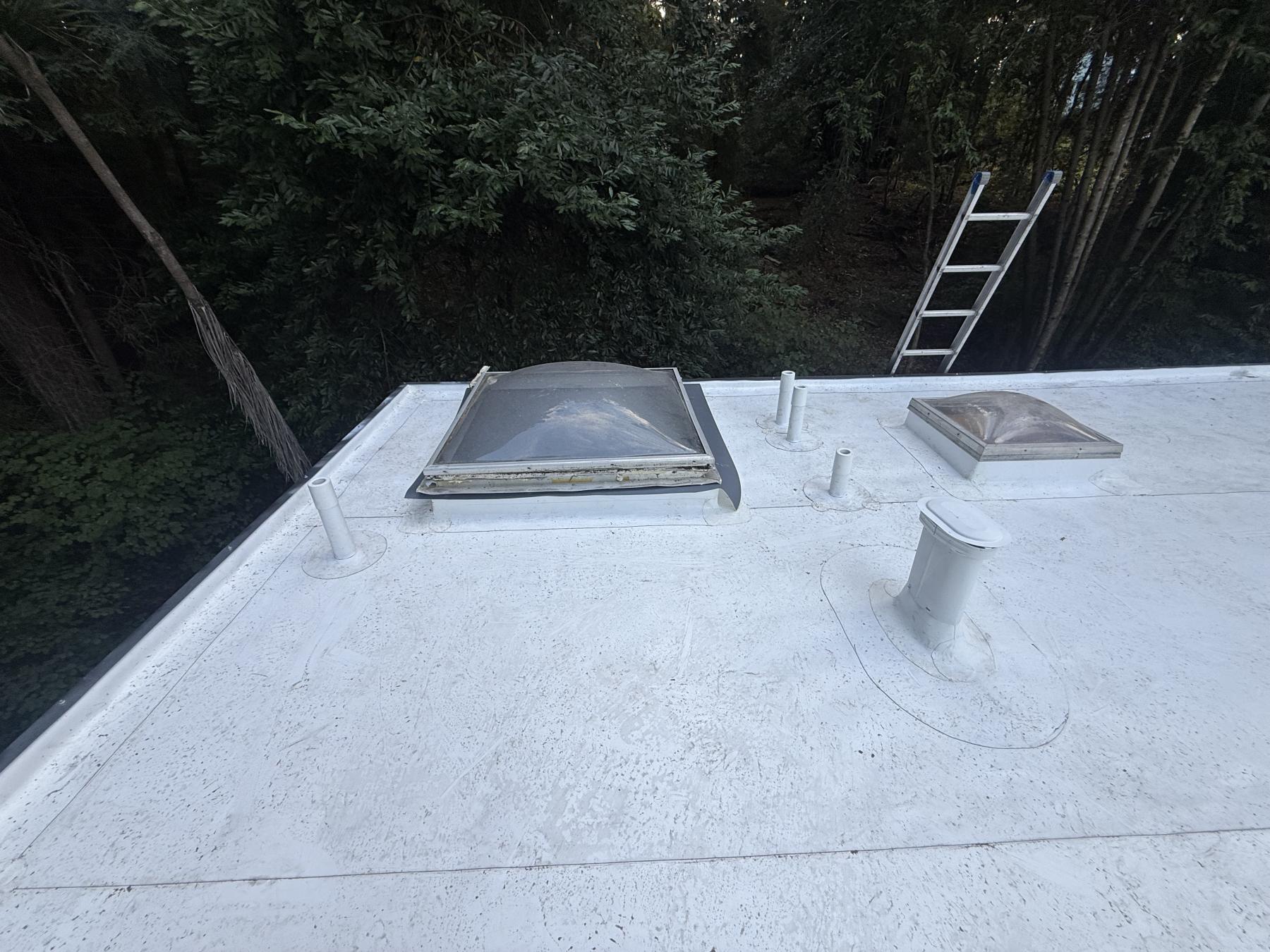
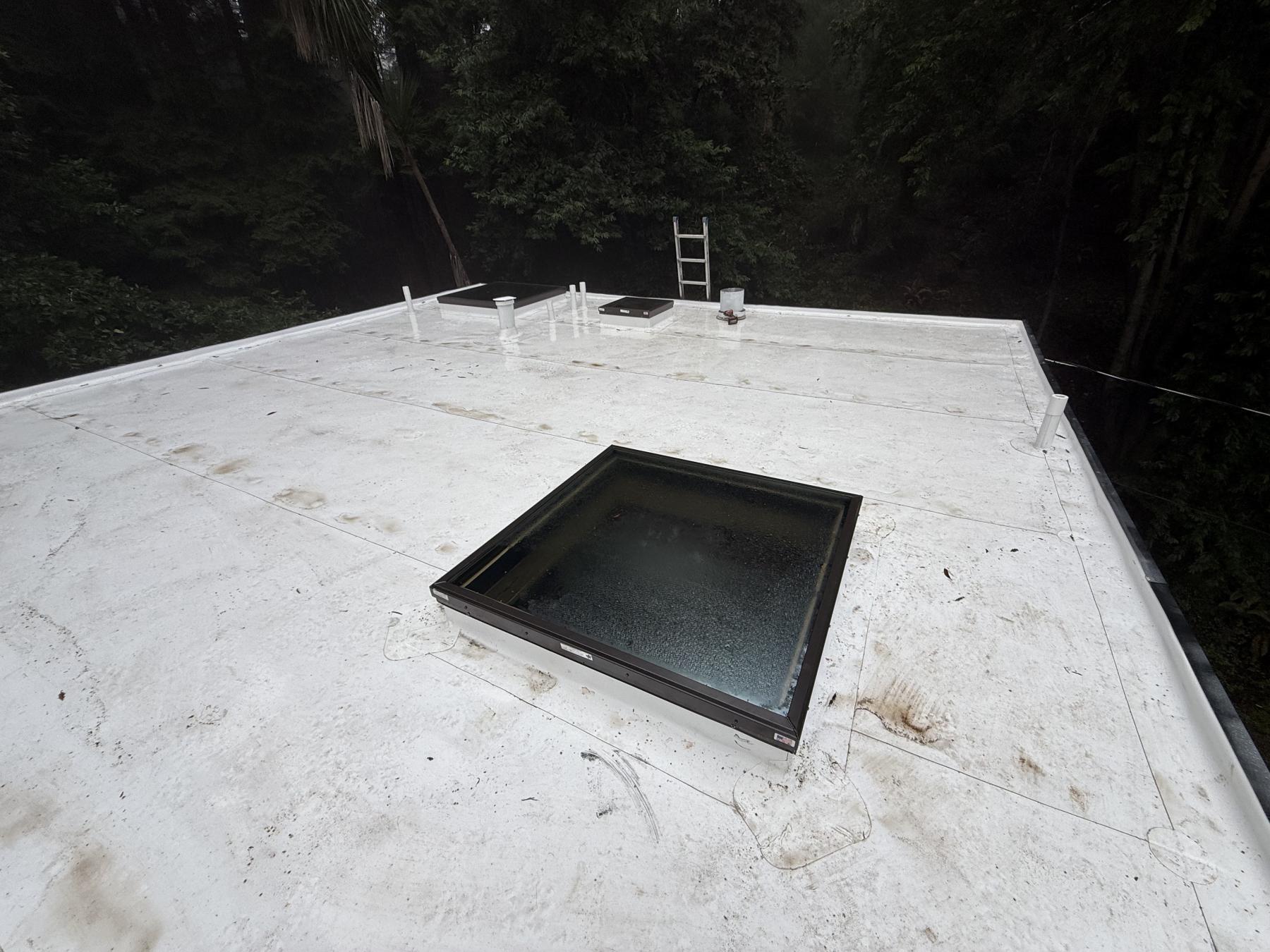
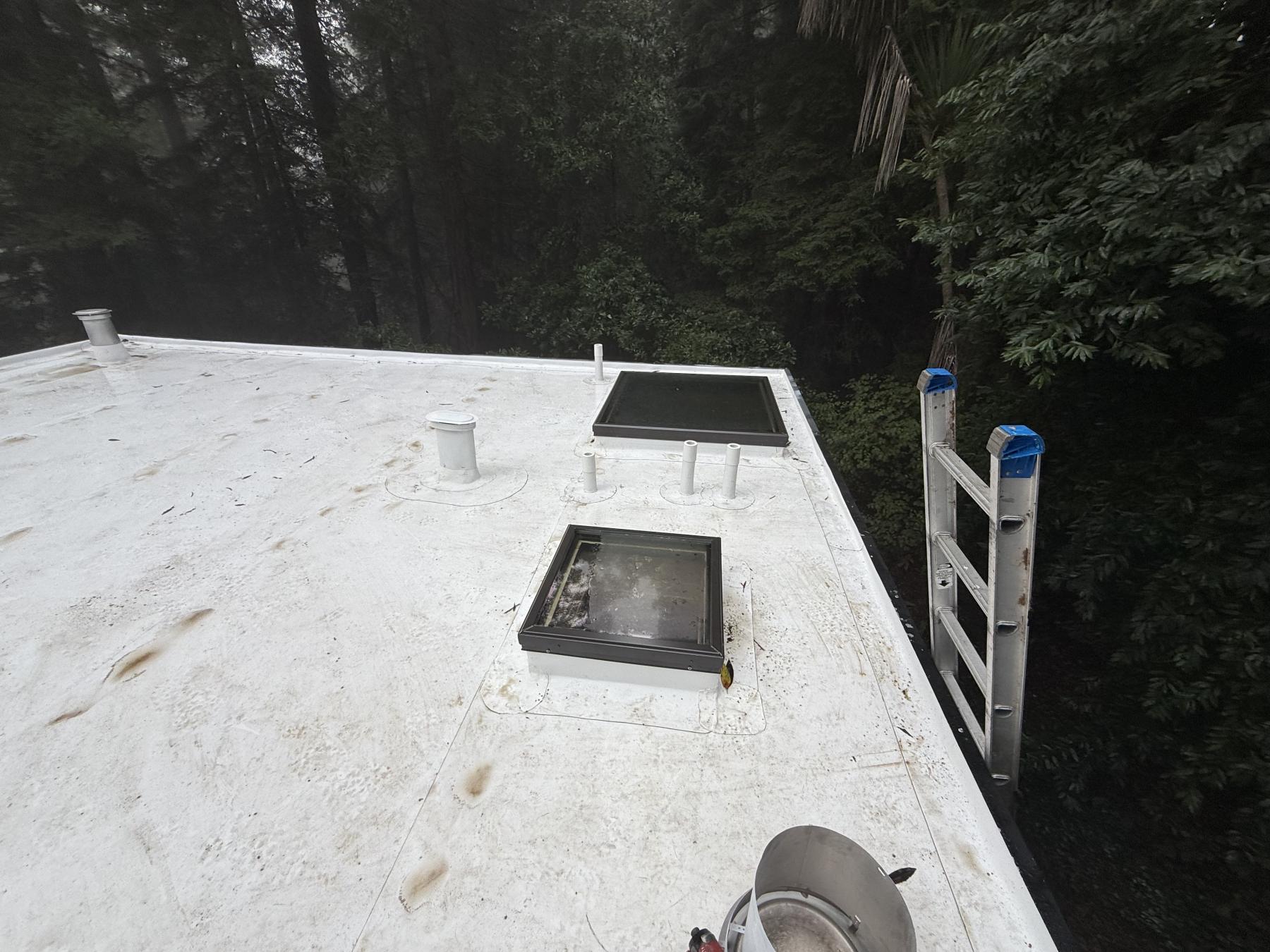
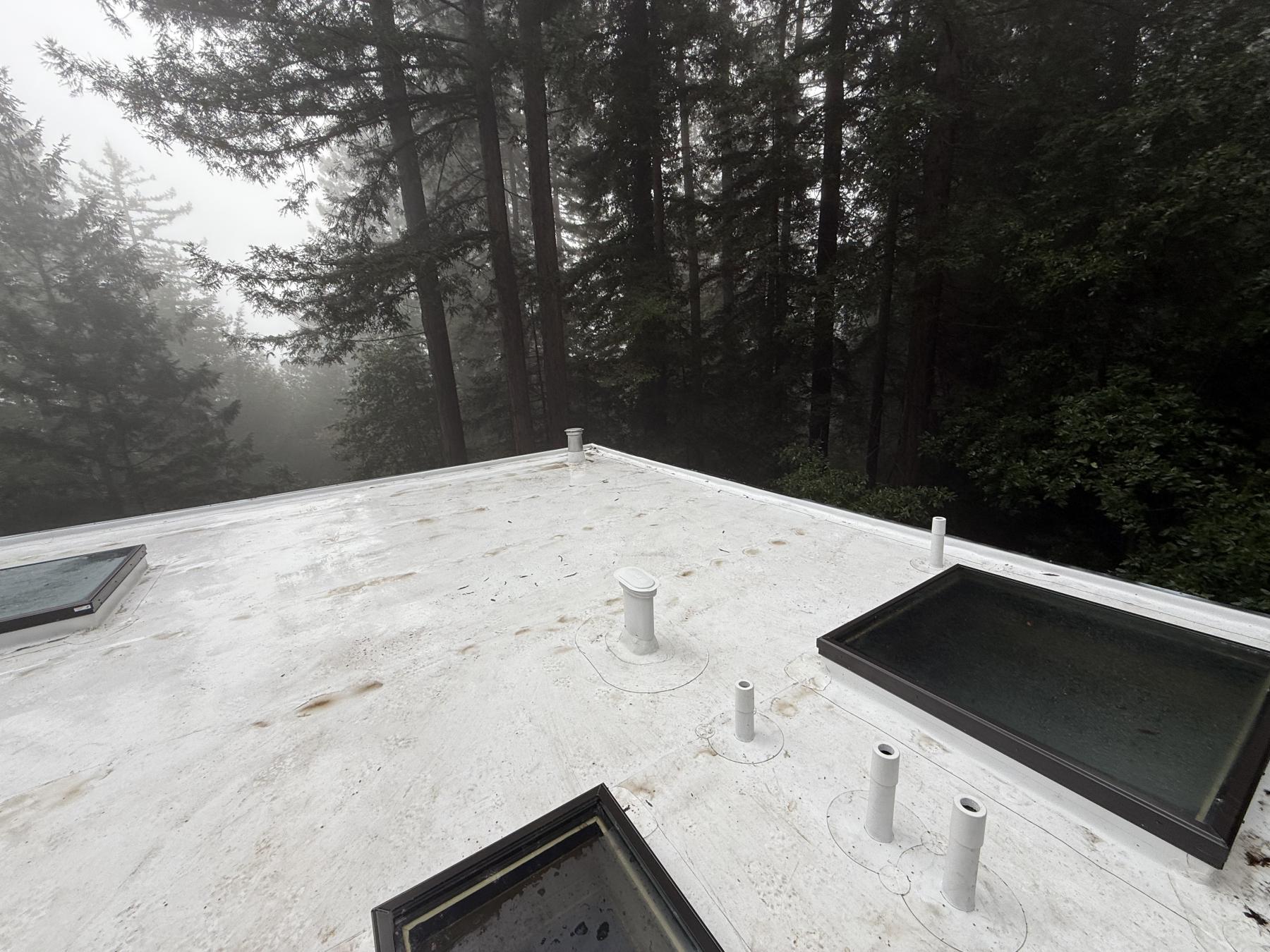
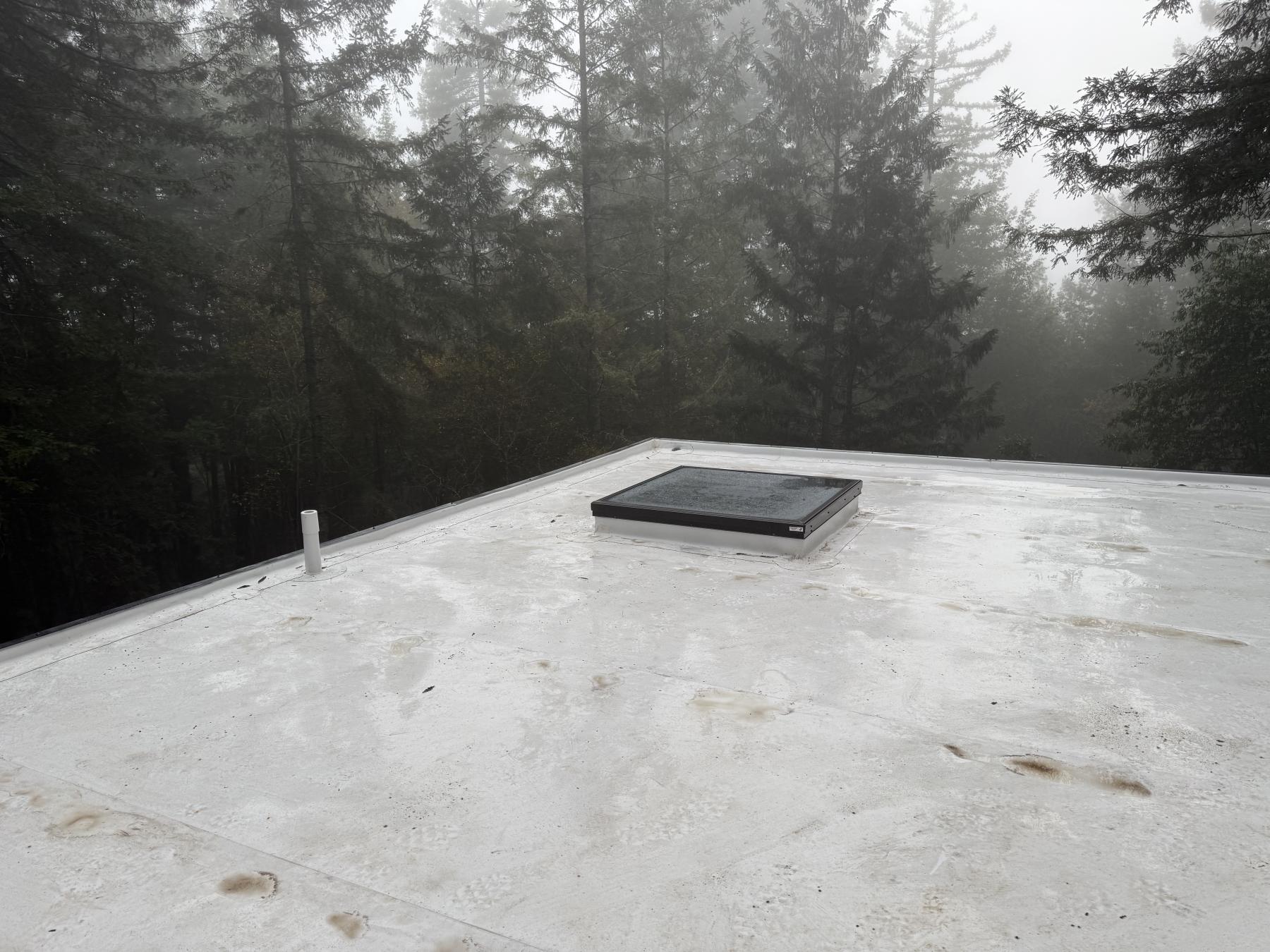
We started by tearing off every layer of the existing roof system down to the deck so we could finally address the problems at their source. The deck itself was inspected and repaired where needed, and from there we rebuilt the roof system the way it should have been done from the start. The skylights got new curbs of at least 5.5 inches to keep water away from the openings, and a full parapet was built around the entire perimeter to stop water from spilling over the edges. For fire protection in this mountain forest terrain, we installed not one but two layers of Class A fire-rated moisture barrier — when it comes to fire prevention out here, more is more. We then built in a proper slope using multiple layers of insulation laid in an offset pattern, which served two purposes: directing water naturally toward the downspouts the way it should have always flowed, and reducing thermal bridging to improve the home’s energy performance. The new TPO membrane went on top — chosen for its long-term durability and its ability to handle the conditions this home faces year-round — along with all new penetration flashings and properly built skylight curbs. Finally, we installed new Title 24 compliant skylights with argon-filled tempered glass to bring the home up to current energy code and finish the roof off with a clean, modern look.
Why It Matters
A flat roof isn’t supposed to be flat — it’s supposed to drain. When previous installers stack overlays instead of solving drainage, every problem gets worse: ponding water adds weight, accelerates membrane failure, and finds its way into the home through whatever weak point it can. Add no curbs at the skylights and no parapet at the edges, and you’ve got a roof system actively damaging the structure underneath it. Rebuilding a roof like this from the deck up isn’t a luxury — it’s the only way to actually fix the problem instead of burying it under another layer.
The Result
A roof that finally works the way a flat roof is supposed to. Water now flows to the downspouts and exits the home through the path it was designed to take, instead of pouring over the edges onto the fascias and foundation. The structural deflection is no longer being fed by ponding water and accumulating overlay weight. The skylights are sealed, raised, and Title 24 compliant. The fire protection meets the demands of mountain forest terrain. And the home’s foundation, deck, and fascias are finally protected from the runoff that had been quietly damaging them for years. Every problem this roof had — addressed, corrected, and built to last.